2013-01-18

1/17和訳:自分の足跡をたどる~サラワク再訪

前回の私の投稿が謎めいていると思った読者のみなさんには謝らないといけませんね。「サラワク」って何?、なぜ戻ったの?、なぜもっと早く戻ることができなかったの?、何のことを話しているの?
                  
長い話なので、いつかきちんと書きあげる時間をつくりたいと思いますが、とりあえず簡略版として書いてみることにします。
 
(右端がアンニャ、1991年)

サラワクは、ボルネオ島にあるマレーシアの州で、20年ほど前から、最も急速なペースで伐採が進められています。その結果、森林だけでなく、世界で最後ともいわれる遊牧しながら狩猟採集型の暮らしを続けてきた、心優しく平和的なペナン民族とその文化も、脅かされています。
 
世界的な抗議運動に連なり、私は、最大の市場である日本における熱帯材の浪費をやめさせようというキャンペーンを行い、ペナンの人々のメッセージを世界に広めることによって、彼らを支援しようとしました。

1991年、この問題に焦点を当てて国際的な注意をひくための死に物狂いの緊急行動として、また伐採のための道路を長年平和的に封鎖してきたために逮捕されていた数百人のペナンの人々と連帯して、私たち8人(オーストラリア、英国、米国、ドイツ)は、日本行きの船に木材を積み込むのをやめさせるため、積み込み用のクレーンによじ登りました。

私はギターを持っていき、歌を歌いました。(クレーンの一番上でも、ちっとも怖くありませんでした。)その結果、私たちは「嫌がらせ目的の不法侵入」という理由で、マレーシアで2か月間投獄されました。

当局は私たちを「環境テロリスト」と呼びました。地元の代議士達は私たちを支援してくれました。ペナンの人々は恐らくある程度は力づけられたと感じたでしょう。マレーシアのNGOは、このような性急な外国人の活動家からは距離を置いていました。そして、伐採は以前よりも速いペースで続けられました。。。

刑期の後、私たちは国外追放され、二度と戻ることは認められないと言われました。私は、約1年後にインドネシアから国境を越えて密かに戻りましたが、支援しようとしても効果がないと感じました。

私は、日本、ニュージーランド、オーストラリア、スウェーデン、フィンランド、カナダでも運動しましたが、伐採は続けられ、最もアクセスしやすいエリアが全て伐り出されると、ヤシ油プランテーションへ姿を変えていきました。

最終的に、私は、この経済構造を変えない限り、世界中のどこの森林や人々を本当に保護する方法がないということに気づきました―私たちは、根本的に考え方や暮らし方を変える必要があります― それこそが私が行おうとしていることですし、だからこそ、私がサラワクを訪れてから、20年以上経っているのです。

 
  ◆ ◆ ◆


森林へ戻る
(20121216)

 
私は、リンバン川の土手に腰をおろして、パチャとヤニがペナン族の子供たちの一団と一緒に川に飛び込むのを見ています。

私たちは、およそ10組ほどの家族の小さな半居留地であるL・ギタにいます。時々、異なる方角から、一人あるいは二人の他のペナンの人々がふらりとやってきます。-そろそろ集まる頃だという噂が出回っていたのでした。
 
私たちは昨日、ラワスから四輪駆動車に乗ってやってきました。祝福を祈る集会の前に用意が整うまで我々は出発せずに待つので、時間は関係なくなってきました。
 
私たちの旅は恵まれていました―聖なるバツラウィ山(友人のブルーノ・マンサーが最後に目撃された場所)をハッキリとみることができるすっきりと晴れた天気でした。この場所を何度も訪れた記憶があふれるように思い出されました、涙も感謝も。

それでも、丸太を積んだトラックは来続けていました。この地域は、その後、コタキナバルからビントゥルへの地下パイプラインを引いた石油会社とも闘っていました。それ以降は、サラワクの広さを考えれば絶望的かもしれませんが。

私たちは多くの吉兆に出会いました: ちょっとした天気雨、川の上のつばめの一群、コワイというサイチョウの鳴き声、S字形の雲、ハチドリ。。。これによって私は、この話をこのブログで共有しようということを思い出したのです。


私たちは昨夜、木の床の上に眠りました―ヤニは朝それで文句を言っていましたが、なんとか眠れました。彼らは、子供達やペットの猿や、そのあたりの野生のイノシシや子ネコといてとても楽しんでいました。川は素晴らしい。。。

午後の遅い時間に人に会って、かつての思い出が蘇りました。私がペナン族の名前もらうきっかけとなったホエジカに会ったとき一緒にいた10歳ぐらいの少年に再会し、大人になった彼は今でも私を覚えていてくれたのです。
 
私は昔抗議したときの歌を歌いました、そしてどれだけ多くのものが失われたかという悲しみについて話をする一方、運動を続けていこうという覚悟をどれほどしているか―私たちの子どもたちも戦い続ける必要があるでしょう―についても話し合いました。


【翻訳:平戸実生】

2013-01-17

walking in my footsteps...

 My apologies to people who found my last post a little cryptic: 'Sarawak'? What's Sarawak? Why did you go back? why couldn't you go back earlier? what are you talking about?

It's a long story and someday I'll make the time to write it up properly...but for now, here's a short version:

Sarawak is a Malaysian state on the island of Borneo, with the fastest rates of logging from around 20 years ago, threatening not only the forests but the culture and survival of tribal peoples including one of the world's last tribes of nomadic hunter-gathers, the gentle, peaceful Penan. As part of the global protest movement I campaigned for an end to tropical timber waste in the largest market, Japan, and tried to support the Penan by sharing their message globally. In an act of urgency and desperation to get international attention focussed on the issue and in solidarity with the hundreds of Penan who had been arrested for peacefully blockading the logging roads over many years, 8 of us (from Australia, the UK, the USA and Germany) climbed up cranes to stop them loading logs onto ships bound for Japan in 1991 - I brought my guitar and sang (no small feat at the top of a crane!). As a result we were jailed for up to 2 months in Malaysia for 'criminal trespass with intention to annoy'. The authorities called us 'eco-terrorists', local legal representatives supported us, the Penan people perhaps sensed some brief empowerment, Malaysian NGOs distanced themselves from these hot headed foreign activists and the logging continued faster than ever...After jail time we were deported and told never allowed to return...I returned quietly over the border from Indonesia about a year later but felt ineffective in helping...I campaigned in Japan, New Zealand, Australia, Sweden, Finland, Canada...but the logging continued, morphing into palm oil plantations as the easiest areas to access were logged out...finally I realised there was no way to truly protect any forest or people anywhere in the world without changing our economic structure - we need to fundamentally change our way of thinking and our way of living...so that's what I've been trying to do, and that's why it has been over 20 years since I visited Sarawak.
 
Back to the forest
(December 16, 2012)

I'm sitting on the banks of the Limbang river watching Pacha and Yani jump in along with a bunch of Penan children. We are in L. Gita - a small semi settlement of some 10 families. Every so often from a different direction one or two other Penan drift in - the word had gotten out that it is time for a gathering.

Yesterday we travelled by 4wheel drive from Lawas - time becoming irrelevant as we wait till things are ready before gathering in prayer for good blessings before we go.

Our journey was blessed - fine, clear weather as we catch an unobscured glimpse of the sacred Batu Lawi, the last destination of our friend Bruno Manser...Memories of the many visits to this place come flooding back, tears and appreciation...the logging trucks keep coming...communities here have also been fighting the Petronus company that has laid a pipe line under the ground from KK to Bintulu - in it's wake a scar the breadth of Sarawak maybe...

We saw many good omens: a tiny sun shower, flocks of swallows on the river, sound of kowai, hornbill and clouds in the shape of s hummingbird...it reminded me to share this story here...

We slept on the wooden floor last night - Yani complaining in the morning - but somehow we slept ok. They have had so much fun with the kids and with the pet monkeys, wild boar and kittens around the place.
The river is glorious...

Meeting later in the afternoon recalling old stories - a man remembered that he had been the boy of around 10 years old that had been with us when we met the barking deer that gave me my Penan name.

I sang the old protest songs, we talked about the sadness of how much was lost, but how we were determined to continue - our children would need to keep the struggle.

2013-01-16

1/14和訳:過去の自分に連なる~サラワク再訪

私たちの旅が始まってから既に2ヶ月が過ぎました。記憶はちょっとぼやけていますが…。写真や旅の短い最新情報はフェイスブックに更新しているものの(覗いてみたいという方はアンニャ・ライトで検索してみてくださいね!)、ブログを更新できるほどインターネット環境にいることができていませんでした。ごめんなさい!

メモはずっと書き留めています。写真は載せるのに時間がかかるかもしれませんが、ここに書き留めたメモをゆっくりと投稿していこうと思います。

私にとって、最もエモーショナルで感動的で、大切なことを再発見できた出来事は、再びサラワクを訪れたことでした。驚いたことに私たちの旅はかなりスムーズに行きました。現在も進行中の、森をめぐる闘いの中にいるペナン族と彼らを支援する活動家のみんなと再会できただけでなく、私たちの親愛なるスローな友人、辻信一さんを、ボルネオにあるサラワクの森と人々に引き合わせることもできたのですから。私たちは祈り続けます。サラワクの森を守るために、そして、決してあきらめないサラワクの人々をサポートするために・・・。

さて、ここからが私の最初のメモです。すぐにもっと載せますね。


●サラワク

入国管理局では心臓がバクバクでした。審査官はゆっくりと私たちのパスポートの手続きをして…、私たちは無事入国できました。

それは現実とは思えませんでした。もうずっとずっと昔、私はこの土地を後にしました。そして、そのあと、本当に多くの森を守るための計画が後退していました。しかしこれも私たちの活動が脅威と見なされていた時から長い年月が過ぎたためでしょう。破壊と搾取の波はとても強大で、もう何ごともそれを押し戻すことができないのです…。

私の再入国は極秘情報だったので、活動の準備をしてくることはほとんど不可能でした。それでも、ホテルを見つけ、サラワクの森林保全活動家の主要な一人と会う約束はできました。

現在、いいニュースは特にありません。要するに、90年代半ばに材木資源は枯渇したため、伐採はどんどん減少していき、伐採された土地にはどんどんパーム油の畑が増えています。現在では予定地300万ヘクタールの内、約100万ヘクタールがヤシ畑になっていて、これは材木のプランテーションでも同じ状況です。

しかし、今住民の口から出る言葉は、森と人々が暮らす広大なエリアを水没させることになる一連の巨大ダムについてです。サムは、訴訟のためにGPSシステム(衛星利用測位システム)を使いながら、土地に対する住民の従来の主張を実証しようとしています。ペナン側のグループは道路を封鎖してもっと補償金を請求することにいくらか「成功」はしました。

首相は未だに極めて神聖な存在で、過去30年もの間、彼が露骨に不当な利益を享受してきた事実を口にする勇気は誰にもありません。

ミリは現在では大きな町になっていて、伐採会社のオフィスがビジネス街に点在し、宮殿のような豪邸が郊外に点在しています。そして貧富の格差は深い亀裂のようです…。

私たちはタクシーに乗ってビーチへ行きました(私が90年代に非暴力直接行動をしたとき、どこにパスポートを埋めたかを子どもたちに見せたかったのです)。水は茶色くて泡立っていたけれど、多くの人たちはそんなことも気にせず、日没や海岸にたくさんある売店で夕飯を楽しんでいました。

私たちは川の上流へ行けるように何とか手配することができました。まずはマルディへの恐怖のドライブです。私たち9人と運転手1人、それに荷物を一台の四輪駆動に詰め込んで、泥道のヤシ畑を2時間走るのです。振動で私の歯痛は悪化しましたが、その苦痛も何とかやり過ごしました!この凄まじく破壊された土地に帰ってきた私の心の痛みと共鳴して、そんな経験も何だか適切なものだったようにさえ思えます。

次の目的地ロング・ラマまでは、できることなら車を避けて川の旅を選ぼうと決めていました。そこで車と合流し、さらに上流地域を目指すことになっていたのです。4時間の旅の末、ようやく私たちが到着すると雨が降り始め、モンスーンの雨に私たちの車は役に立ちませんでした。そんな訳でボルネオのジャングルの辺境の町でもう一泊することになりました…。

私たちが雨から避難したのは小さなレストランで、そこにはおなじみのテレビがMTVを鳴り響かせていました。グローバリゼーションは紛れもなくここでも上手く機能しているのです。人々は何でも持っているのに、自分たちの運命をコントロールする力を失ってしまっています。

私たちの車は、豪雨により一瞬にしてできたぬかるみから抜け出せなくなり…、私たちもその夜はロング・ラマから抜け出せなくなりました。

私たちは泊まる場所を探して回りました…。ここは確かに辺境の町ですが、私たちにとっては最高の土地で、私たちはこれから数々の素晴らしいできごとを経験することになるのです!


【翻訳:西嶋明子】

2013-01-14

back on track...

Two months of travel have passed already...it's a kind of blur...although we've been keeping up with facebook, posting photos and short travel updates (if you'd like to take a look, please search for Anja Light) - we haven't been stable enough around an internet cafe to be able to update the blog...my apologies!
I've been keeping some notes - so I'll slowly begin to post them here - though it may take longer to include photos...
For me, the most emotional and moving and reaffirming experience has been to revisit Sarawak. To my surprise, our journey went quite well - not only were we able to reconnect with the Penan and campaigners in the ongoing struggle for the forests, but we were able to introduce our dear Slow friend Keibo Oiwa to the people and forest of Sarawak, Borneo. Our prayer continues to protect these forests and support these people who have never given up...

So, here is the first of the notes I have kept...more to come very soon...


Sarawak
Heart thumping at immigration - the officer slowly processes our passports - we're in.
It's surreal. So many, many years ago I left this place. And with so many visions of being turned back at the final outpost. But perhaps it has been years since our activities have been considered a threat - the tide of destruction,exploitation so strong that nothing can hold it back...
Trying to be so secret means that it has been almost impossible to really prepare our movements from here, but we find a hotel and arrange to meet one of the key campaigners here.
There's not much good news. Basically the logging dwindled during the mid 90's as the timber ran out and there was more and more conversion to palm oil. Now there's around a million ha of a projected 3 million - the same goes for timber plantations.
But the word on everyone's lips in this area now is the series of massive dams that is set to inundate vast areas of forest and people's homelands. SAM works to document people's traditional claims to the lands using GPS systems for court challenges. Penan groups blockade the roads and have had some 'success' in claiming more compensation.
The Cheif  Minister's name is still sacrosanct and  no one dares to utter the truth of his most blatant profiteering over the past 30 years.
Miri is a large town now - logging company offices dotted around the business district, palatial houses dotting the outskirts - the gap between the rich and poor like a chasm...
We took a taxi to the beach ( I wanted ti show the kids where I had buried my passport) - the water was brown and bubbly but that didn't deter the many people who had also come down to enjoy the sunset and an evening meal in the many food stands be the shore.
We managed to arrange a visit upriver - starting with a horror drive to Marudi. Nine of us plus the driver and our luggage squeezed into a 4 wheel drive on a mud track through 2 hours of oil palm. The jolting aggravated my toothache and I spent of the way in agony! It seemed appropriate somehow...it matched the pain in my heart to come back to a place so ravaged...
We decided to avoid the car if we could and opted for a river trip to the next stop of Long Lama where we to meet with the car to go further up river. As we arrived after our 4 hour journey the rain came, monsoon rain and our car didn't make it - so another night in a Borneo jungle frontier town...
We shelter from the rain in a small restaurant where the ubiquitous TV blares out MTV ... globalisation is well and truly here - people have all but lost control of their destinies...

We find out that our car is stuck in a flash flood caused by the downpour..we are stuck in L Lama for the night.
We do the rounds looking for a place to stay...it really is a frontier town and the best place has seen many better days!

2012-11-14

Solar Eclipse to start our journey...

Tonight we're leaving. This morning we saw the sun rise into a solar eclipse. Amazing that there was only 20% left of the sun but the day was as bright as ever...like a candle light, just a little light goes so very far...Pacha and Yani were in the ocean catching waves - it was a good beginning to our story. We're all excited and nervous - but ready as we will ever be!

2012-11-05

11/2和訳:母なる地球を辿る旅

(ヤニのスケボー姿。パチャによる撮影)

今日、昔からの友人に会って近況を聞かれた私は、パチャとヤニと私がこれから始める世界を巡るスローな旅の話をしました。すると彼はこう言いました。「あぁ、君たちはウォークアバウト(walk about)を始めるんだね?」

ウォークアバウトを知らない人もいるでしょう? 次のような定義があります。
「ウォークアバウトとは、アボリジニに伝わる文化のひとつ。精霊たちの辿った道をすすみ、自分の一族にあてがわれた夢見を得る旅。途中、先祖代々の神聖な場所に立ち寄り、伝統的な儀式やカラバリを執り行う」

そう、それこそが私たちが今していることなのです。
私たちは、今の私たちへと連なる人々や場所、母なる地球と呼ばれる祖国を訪れるつもりです。昔行った場所を再び訪れ、そこでの経験を子どもたちと分かち合います。

私の生き方や運命は、その経験に大きく影響されてきました。かわいい子どもたちを産んだのも、そこでの経験があったからこそ。もっとも、子どもたちもまた、数年後には私の元を離れ、自分の人生を歩んでいくことになるでしょう。

私たちは、旅の中で、私たち独自の儀式をしたいと考えています。祈りを捧げたり、歌ったり、踊ったり、人と交流したりすることを通して、世界の変化を見届け、将来のあり方をじっくり考えるのです。

どこへ行っても、私たちは出会う人々の役に立ち、物事や人々との出会いに喜びや好奇心を抱き、多くを学び、人々と分かち合っていきたいと思います。

(家にやってきた訪問者!=へび)


最初の目的地は、マレーシアのペナンです。1986年、そこで開催されたFoE国際会議で、私は初めて地球全体に広がる環境破壊や森林伐採、先住民の絶滅の危機について知りました。

私が初めてジョン・シードに会い、ディープ・エコロジーの思想に共鳴したのもペナンでした。ペナンを出発して、私たちはタマン・ネガラ国立公園の熱帯雨林を訪れ、テナガザルと戯れる予定です。

次の目的地はボルネオ島とバリ島。そこで友人と20年ぶりの再会を果たします。友人との再会に泣き笑い、ここまで来てしまったんだなぁと我ながら驚くことでしょう。

子どもたちは、これまで私が話してきた物語ーかつて私が全身全霊をかけて取り組んだ一連の真実について、肌身を通して体験することになるでしょう。ほとんど失われてしまった美しい熱帯雨林、資源の搾取という厳しい現実に苦しむ人々、グローバル化し、歪みの生じた文化。そこで見聞した問題意識が、子どもたちの中に生き続けることを祈ります。

それから、私たちはナマケモノ倶楽部のもう1つの拠点、エクアドルを訪れます。パチャやヤニの父や親戚たちに会い、雲霧林の中にあるエルミラグロで過ごします。

もちろん、日本にも帰ってきます!3・11で亡くなった人々に哀悼の意を捧げ、昔からの友人や新しく出会う人たちと思いをひとつにします。ヨーロッパにも行くかもしれません。まだ見知らぬ親戚との再会は、母方である私のルーツをたどることは、共通点や相違点への驚きをもたらすかもしれません。

さらに、私たちは新しい物語も紡ぎはじめます。主人公はパチャとヤニ。彼らの愛する海での時間、波さえあればどこでもサーフィンできる喜びに、私もついていくつもりです。パチャはサーフィンでつづる冒険のブログも立ち上げました!(http://pachalina.wordpress.com/)

(小学校の学期末の学芸会で歌うパチャ)


出発まであと数日となった今、私たちは身の回りの準備を整え、これまで生きてきたすばらしい日々に感謝しています。時間ができると馬のオリーと遊んだり、私たちが植えた果樹の葉をそっと触ったり、近所の人たちや友人にお礼のあいさつに行ったりしました。旅をしている間、ここでの生活を思い出すことができるように、ここの森や海のイメージを心に刻みつけています。

このように書くと、私たちがここを去って二度と戻らないように聞こえるかもしれませんね。でも、あらゆることが起こり、変化しうる。それこそが、旅の本当の意味なのではないでしょうか? もし、私たちが戻ってきたとき、ここに何の変化がなくとも、私たちは変化してゆくのです。

だからこそ、たくさんの感動や驚き、悲しみがあるのです。もう一度、よく生きる方法とは何かを思い出すために、私たちはここでの不足ない生活を捨てて旅に出るのです。

【翻訳:原田真里】

2012-11-02

Going Walkabout...


Today I met an old friend who asked me what I was doing. I told him about the slow world journey Pacha, Yani and I were about to embark on and he said: ‘Ah – so you’re going Walkabout’?
This is the definition I found:
“In the Walkabout, the Aboriginal spirit-journey, Aborigines follow preordained routes through their family’s own particular inherited portion of Dreaming country along the paths of the Spirit Ancestors. Along the way, they stop at ancestral sacred sites to perform prescribed ancient secret-sacred ceremonies, or corroborees.”
Yes, I think that’s what we’re doing.
We are going to visit the people and places that have formed who we are – in a ‘country’ called Mother Earth. Re-visiting and sharing experiences that have inspired my identity, guided my destiny and even led me to bring forth these beautiful children who will, in a few short years, leave my care to write their own story. We hope to do our own kinds of ceremonies; praying and singing and dancing and connecting – witnessing the changes, contemplating the future. We hope to be useful and helpful, joyful and curious, learning and sharing wherever we go.
Our first stop will be Penang, Malaysia, the place I first learnt about the extent of destruction of the planet, the forests and native peoples at the international FOE conference in 1986 - the place I first met John Seed and resonated with the idea of deep ecology. From there we will visit the deep rainforest of Taman Negara, and whoop along with the gibbons.
We will revisit Borneo and Bali, re-connect with friends I haven’t seen for over 20 years. Laugh and cry and raise our eyebrows in surprise that we are still here. The children will watch and learn and experience as we face the stories I was so intimately involved in – the beautiful forests, almost gone – the people, perhaps brutalised by the hard, cruel reality of resource extraction and exploitation, the influence of the twisted, globalised culture. The survival of some kind of spirit – enough hope to go on…
Later we will wander to our other homes – to Ecuador, to our family, to the cloudforest, to El Milagro. We will return to Japan, to mourn and to celebrate, embrace old friends and new. We’ll even try to get as far as Europe, meet our never seen before relatives - trace our side of the lineage and marvel in the similarities and differences.
And we will weave in the new story that Pacha and Yani are leading me into; their love for the ocean and their joy in surfing wherever there are waves. Pacha even has a blog (http://pachalina.wordpress.com/) focussing on her surfing adventures.
Now, in the last few days before we fly, Pacha, Yani and I have all been looking around us, appreciating this incredible life we have been living. Spending extra time hugging Ollie, touching the leaves gently of the fruit trees we have planted, taking extra care to visit neighbours and friends and say thank-you for their friendship over the years - burning the images of the forest and the ocean into our minds so we can recall this life as we travel along.
Pacha sings at the end of year concert
It sound like we are leaving forever doesn’t it? Well that’s what a journey really means doesn’t it? – anything can happen, anything can change – even when/if we come back to this place, we will be so different, even if things here stay the same. So, there is quite a lot of emotion, excitement and sadness - we are leaving this perfect life to remind ourselves, once again, how to live a good life… 
a visitor came in to visit!
Yani's skateboarding - photo by Pacha

2012-10-12

10/10和訳:屋根の上から


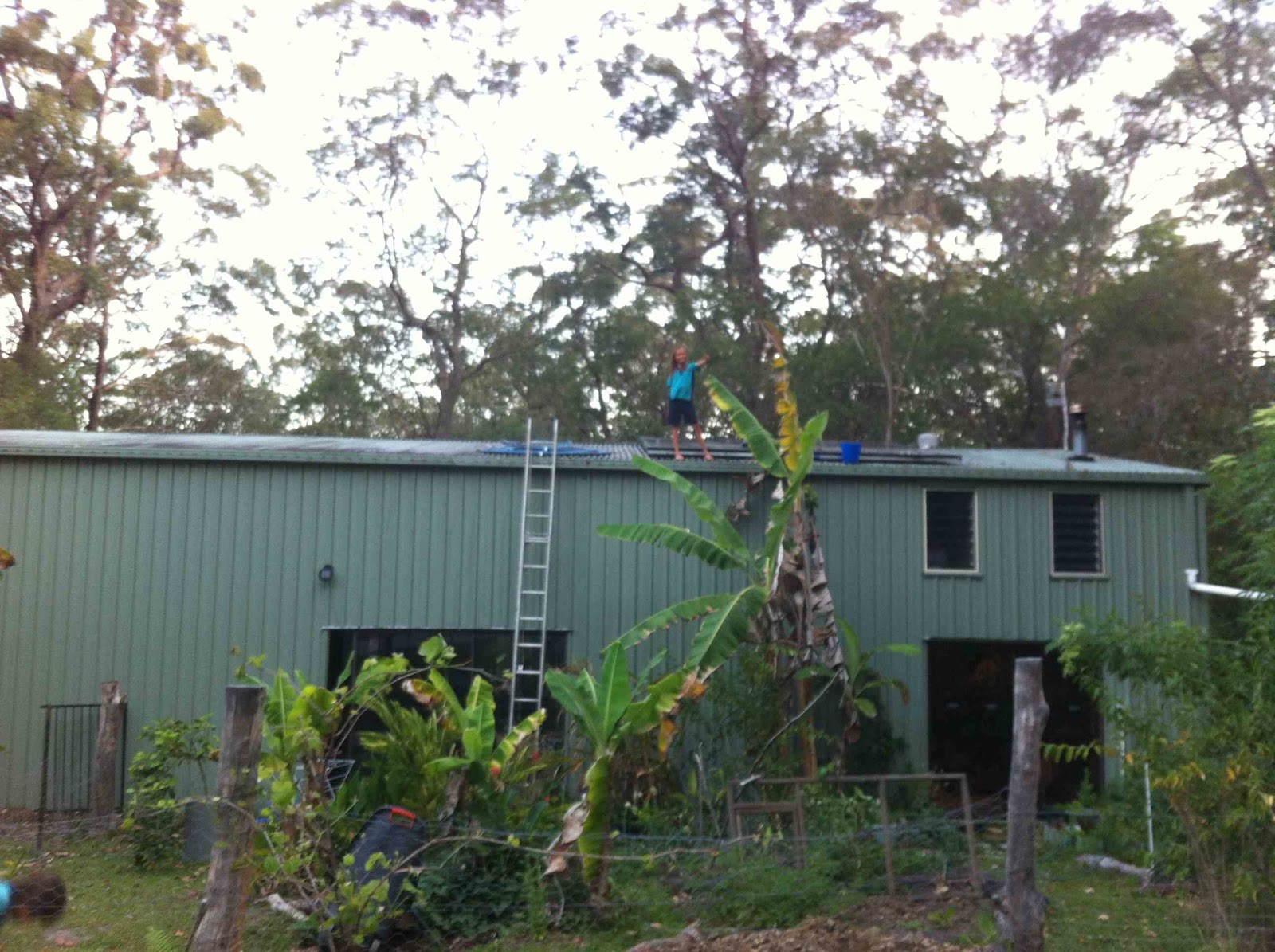
屋根の上から(パチャ撮影)


私たちは来月(11月)から始まる海外でのバカンスに向けて、家の周りの片づけや準備をしています。
太陽光パネルと屋根の掃除をしようと、屋根に上る準備をしていたら、パチャがリスのようにすばしっこく梯子をよじ上っていきました。屋根は高さ5m(16フィート)、約30度の傾斜があります。

「パチャが屋根から落ちるかもしれない…」、「あんなに高いところに上らせたらダメ!」、「(子どもをあんなに高いところに上らせておくなんて)親として無責任な態度だわ」、「(子どもをあんなに高いところに上っているのを見たら)ご近所さんはどう思うかしら…」、私の頭には、様々なシチュエーションが次々に浮かびあがってきましたが、パチャがすばやく、しかも堂々と軽快な足取りで上っていくので、私はかろうじて「気をつけてね」とだけ呼びかけました。

屋根の上に立ったパチャは、そこからの世界を眺め、写真を撮り、嬉しそうにしていました。パチャは山ヤギのように確かな足取りでしたし、薄いトタン屋根がかすかにきしむ程度の軽い身体でしたので、私は彼女の願い通り、屋根みがきをさせることにしました。


そうして、私は屋根のといから長年積もったゴムの葉を掃除し、パチャは大きな箒と石鹸水の入ったバケツを持って掃除を始めました。その作業はものすごく楽しくて、やりがいと充実感に満ちていました。私とパチャがチームになって掃除すると、屋根は見違えるほどにきれいになりました。水は淀みなくタンクの中に流れ、屋根を覆っていた埃や汚れもなくなり、パネルには太陽の光が降り注ぎ、屋根は再び元の緑色に戻りました。


時折、パチャが足を滑らせて屋根から落ちるんじゃないかという思いが脳裏をかすめ、「もし落ちたら、体を丸めるようにして、うまく落ちなさい」とパチャに注意しようかとも考えました。

でも私はそうしないで、パチャがこれまでの経験で身につけた判断力とそうさせてきた自分のやり方を信じることにしました。「パチャはこれまでの11年間、木登りをしたり、オリーの馬上で片足立ちしたり、サーフィンで宙返りしたりといった危ない遊びをする時は、自分で気をつけて責任を持って遊んでいた」と。私は不安に駆られ、さらにその不安を子どもに押し付けることから自分自身を制することができたのです。そういう心境に至ることで、目の前のスリリングな現実からつかの間の休息を得られました。

私は、読者の皆さんに、お子さんが不必要な危険を冒す責任を負うことを薦めているわけではありません。でもひょっとしたら、危険と恐怖に満ちたこの現代の世界においてこそ、子どもたちはすばらしいことができると私たちがそろそろ信じてあげるべきかもしれません。だって、その危険だと思われていることこそが、子どもたちが無我夢中になれるいのちへの愛情表現の場であり、地球という暮らしを成り立たせている場だからです。


私たちは先週、道路で轢かれそうになったニシキヘビを助けてあげました。パチャはその蛇を触りたがっていましたよ…。


写真:ヤニは目玉焼きを焼きました

【翻訳:原田真里】

2012-10-10

On top of the world

Slow Mother Blog - October 10, 2012


Pacha's view from our roof...


We are doing all kinds around the house to prepare for our time away overseas starting next month.

I was preparing to climb up to scrub the solar panels and the roof as Pacha scampered up the ladder like a squirrel. The roof is 5 metres (16 ft) high and at about a 30 degree pitch.

Through my head came a series of thoughts based on decades of conditioning: ‘she’ll fall’, ‘you can’t let her go up so high’, ‘ that’s irresponsible parenting behaviour’, ‘what will people think?’…but she went up so fast and with such confidence and agility, I only managed to squeak: ‘be careful darling’.

She stood there, on top of the world, taking photos of the view, feeling elated – surefooted as a mountain goat, her lightweight barely touching the weak zinc-alum surface begging me to ‘please’ let her do the scrubbing.


So, as I cleaned out the gutters of a year’s worth of gum leaves, Pacha grabbed the big broom and a bucket of soapy water and got to work. It was so much fun, so satisfying and so gloriously productive – we worked as a team and we made a difference. The water flows into the tank clean and unobstructed, the sun beats down on the solar panels without a coating of dust and grime and the roof is green again.


From time to time I had flashes of images of her slipping, of falling over the edge…I considered reminding her that if she falls, remember to fall well – to tuck and roll…but instead I trusted her own commonsense and my own faith that in her 11 years of
life so far she has demonstrated care and responsibility when taking risks
(climbing trees, standing on Ollie, surfing ‘out the back’). I was able to stop
myself from being paralysed by fear and passing this fear on to my child…I
think, in a way, it was a little break through moment…


I don’t want to feel responsible for anyone else reading this to take unnecessary risks with their kids, but perhaps, in this modern world full of dangers and fears, it is time to trust that our children can do amazing things – and that’s where their
enthusiasm for love for life and living is fed…


We saved a carpet snake from getting 'squashed' on the road last week...Pacha wanted to touch it...


and Yani fried a perfect egg...

2012-10-09

10/9和訳:アンペアダウンの仲間たちに感謝!


私は昨日、誇らしく、興奮して、フェイスブックのリンクをクリックして、ある記事を読みに行きました。世界の人々は、今や、ウォール・ストリート・ジャーナルを通じて、穏やかで、真摯で、控えめな、ナマケモノ倶楽部のやり方について耳を傾けようとしているのです!

その記事の中では、「アンペアダウン」キャンペーンが取り上げられ、様々なやり方でアンペアダウンをする人たちの省エネの取り組みが日本中で行われていることを紹介していました。
このキャンペーンは、北海道のナマケモノ倶楽部会員である、ピーター・ハウレットさん(今年2月に彼に会えたことは本当によかった!)が始めたものです。そして今や世界中で、自分たちも「より少ないモノで暮らす」という楽しい挑戦に取り組める、または取り組むべきではないかと考えるようになるでしょう。

掃除機の代わりにほうきを、炊飯器の代わりに土鍋を、涼しい夜には冷蔵庫を切ろうというようなアイデアは、想像力をかきたて、他人をもやってみようと促すことになります。物質的にそれほど豊かではない国の人々も、世界で最も豊かな国の一つである日本の人々がそのようなことに誠実にかつ真剣に取り組むことで、勇気づけられるでしょう。そして、日本の指導者も、原子力や、地球環境に悪影響を及ぼすエネルギー生産方法から決別する方法があることを思いだすでしょう―日本の市民が、何が「十分か」を示す先頭に立っていますから。

一方で、記事に欠けていたと感じたのは、使うエネルギーをより少なくすることによって、暮らしをシンプルにできたときに感じる楽しい感覚や満足感などについてでした。不運なことに、「豊か」とされる国に住む多くの人々及び(または)「豊かな」家計の人々は、使うモノをより少なくすることは大きな犠牲を強い、「後退」することだといまだに考えてしまいます。実際、私たち人間の存在にとって、そのような意味をもたらすこともあるでしょう。

確かに、私たちは、世界が抱える問題の多くが、個々人の行動ですぐに解決しないであろうことを知っています。でも、実際には、そのような行動は、人々の暮らしを変え、身の回りの全てのものごとに影響を及ぼしていくのです。そうやってこそ、メッセージが広まっていくのでしょう。

ナマケモノ倶楽部よ、ありがとう!
日本でアンペアダウンに取り組む方々、ありがとう!


コンポストトイレの壁をモザイクで装飾中のパチャ。いのちと向き合ってより生き生きとしています!

【翻訳:平戸実生】

Thank you Ampere Downers!

Slow Mother Blog
October 9
Inspiration from Japan


I was so proud, so excited, so happy to click on a facebook link yesterday - it led me to an article. The world is now hearing about the gentle, sincere, humble ways of the Sloth Club through the
Wall Street Journal!

The ‘ampere down’ campaign was highlighted in the article, featuring the energy saving measures of various ampere downers across Japan. The original ‘light-bulb moment for
this campaign came from Hokkaido Sloth, Peter Howlett, (who I was so happy to meet earlier this year) and now all across the planet people will be contemplating whether they too could/should set themselves an enjoyable challenge in living with less.

The ideas about using brooms instead of vacuum cleaners, clay pots instead of rice cookers and turning off the fridge on a cool night will feed imaginations and encourage
others. People who live in countries with less will feel encouraged by the sincerity and commitment by people in one of the richest nations on Earth. And leaders in Japan will be reminded that there is a way to move away from nuclear power and energy production that destroys the Earth – its own citizens are leading the way in showing what is ‘enough’.

What I thought was missing in the article was the sense of joy, contentment and purpose people found when they were able to simplify their lives by using less energy.
Unfortunately many people in ‘rich’ countries and/or ‘rich’ households still think it is a big sacrifice to use less, or a step ‘backwards’ – when, in truth, it can provide such meaning and authenticity to our existence.

We know that the world’s problems may not be instantly solved by individual actions – but the truth of that action will shift the person’s life and touch all those around
them – and the message will spread.

Thank you Sloth Club -
Thank you Ampere Downers of Japan!


Pacha getting energy from being alive! She's mosaicing a wave, with herself in the barrel

2012-10-08

10/8和訳:訪問者からみたシンプルライフ

ここ数カ月、我が家では、すばらしいお客様を次々にお迎えしています。
ゲストの誰もが、彼らの日常にはないものを見たり、体験したりします。みなさんのその反応は、まるでハエの複眼でみられているかのよう(笑)。私たちが本当に「あるもの」で暮らしているということを再認識する瞬間でもあります。

今日は、数週間前に子どもと一緒に我が家を訪ねてきてくれたヘレナ・ルソーバさんのフェイスブックから、美しい写真を紹介しますね。

through the eyes of visitors

We have had many wonderful visitors to our home over the past few months. Each one sees something else, something new - like the multifaceted eyes of a fly, it shows us more about how we live/what we have. Here are some beautiful photos (on facebook)  taken by Helena Rousova when she visited with her children a couple of weeks ago:

https://www.facebook.com/photo.php?fbid=376519865757332&set=a.374435339299118.86765.100001979667859&type=1&theater

2012-09-15

9/13和訳:「地球1個分の暮らし」という夢を生きる

(日本の作文コンテストに応募したエッセイ)
パチャ・ルーケ・ライト


私が自分自身と世界のために創りたい未来は、私たちが幸せに、かつシンプルに、地球を破壊することなく平穏に暮らすことができると皆が気づいている世の中です。

私の夢は、私にとって既に現実のものとなっています―でも、私は、他の人にも、このように暮らしたいと思わせることができたらと望んでいます。

私は地球という1つの惑星の上に暮らしています。そして、私はそれで十分なのです。


「豊かな」国といわれるオーストラリアの、私の住んでいる通りのご近所では、人々は、地球2個か3個分、あるいはもっと多くを必要とするような暮らしをしています。

このあたりのふつうの家には、4つの寝室と2つの浴室があるのが一般的です。菜園を持っている人はあまり多くなく、芝生だけはたくさんあり、それらは多くの電気と生活用水を使用します。どの部屋にもテレビがあり、子どもたちはあまり外に遊びに行きたがりません。親が子どもたちを学校に送り迎えする光景がそこら中で見られます。

私のクラスメートの多くは、食べ物や新しい洋服、あるいはおしゃれにたくさんのお金を費やしています。彼らの親は、たいてい仕事に忙しく、子どもたちの運動会や発表会を見に来る時間がありません。また、私の周りには、一日の多くをビデオゲームをして過ごし、体重や健康に問題を抱える子も多くいます。

私たち家族は、そういう「ふつうの」人とは違った生き方をしています。そして、「ふつう」とは違った暮らしをしていることで、私たちを貧しいと言う人もいます。でも、私は、自分たちは幸せだと思うし、地球に優しい暮らし方をしていることでとても気分がいいのです。

私たちは、ほとんどリサイクル素材でつくった小屋を家として住んでいます。洋服を含め、私たちが使うほとんどすべてのものは、誰かの「お古」です。

うちには、私たちの排せつ物が、循環して果樹の成長に役立つコンポストトイレがあります。電気は太陽から、水は雨水から、すべて無料でもらっています!

私たちは、庭で果樹や野菜を育て、多めにできれば隣近所の人にお裾分けをします。私たちはあまり肉を食べません。けれども、時々、友達が魚を捕まえてきて、私たちに分けてくれます。

毎朝、私はインコやワライカワセミなどの鳥の声で目覚めます。窓から木々を眺めれば、ワラビーが草を食んでいるのが見えます。そして、起き上がった私は、野生馬のオリーに餌をやり、彼と遊びます。

すべてが平穏で理にかなっています。私たちは、どこにいても、このような安らぎと自然とのつながりを見出すことができると思います。

私が自然とのつながりを最も実感し、「ああ、生きているなあ!」と感じるのは、海に入ったときです。サーフィンをしていると、波のエネルギーがぶつかり、押しあうのを感じることができます。そして、そのエネルギーに任せ、あっという間にワックスを塗っただけのサーフボードが波の上に立ったときの楽しさとスリルといったら!―美しい緑の波の上でのひとすべりは、とても言い表せません!

私は、何か大好きなことを見つけたなら、そのことこそが人生を愛おしいものにするのだということを、サーフィンで学びました。

おそらく、私たちが南米エクアドルで、ほとんど物を持たずに暮らしてきた経験があるから、ここオーストラリアにおいて、比較的物を持たずに暮らすことが容易なのでしょう。

エクアドルでは、私たちは未舗装の道路から歩いて1時間かかる、雲霧林の泥で作った家に住んでいました。近くの小川から水を汲み、それを飲めるように沸かしていました。熱いシャワーが浴びたい時は、朝に黒いビニール袋に水を入れておけば、午後には暖まった水で一洗いすることができました。

電気がなかったので、絵を描いたり、躍ったり、庭仕事をしたり、木にのぼったり、本を読んだり、森の中を歩いたり、近所の人を訪ねたり、馬と遊んだりと、ありとあらゆる遊びをしました。

今になって私は、このような経験は、何にも変えがたいものであることだと気付きました。私たちは今でも、毎日の暮らしにおいて、エクアドルと同じ習慣を実践しています。弟と私は、時々、一日に1時間以上踊る時もあります。バス停へ歩くときには歌を歌い、オペラを歌って競っては、目に涙が出るほど大笑いします!

家や近所にいない場合、私たちは、だいたい砂浜でサーフィンしたり、泳いだり、砂丘から飛び降りたり、もしくは岩場をのぞきこんだり、テントを張ったり、友達や家族とスケートをしたりして遊んでいます。

「地球1個分の暮らし」は、みなさんの誰もが手にできる最善のライフスタイルだと思います。お金を持っていれば必ず幸せだとは限りません。本当の幸せとは、人生における素晴らしい思い出と、それらを分かち合える友人や家族の存在によってこそもたらされるのではないでしょうか。

また、本当の幸せは、今あるものに感謝することだと思います。人々がそれらの「今、ここにある幸せ」に気づいた時、少しずつではあっても、彼らもその幸せを手に入れたいと思うことでしょう。

私は既に私の夢を生きています。私がこれからの社会に望むことは、誰もがシンプルで、平穏で、幸せな暮らしを自ら選ぶことができるということに、みなが気づくことです。

【翻訳:平戸実生】

2012-09-13

Living my dream on One Planet by Pacha


Living my Dream on One Planet
(an essay written for a Japanese writing competition)
By Pacha Luque-Light


The kind of future I wish to create for myself and the world is in realising we can live happily and simply, in peace and without destroying our Earth. My dream is already real for me – but I hope I can inspire others to want to live this way too.

I live on one planet and that’s just enough for me.
All around me, in my street, in this rich country of Australia, people use 2 or 3, or even more planets to live.  A normal house here usually has 4 bedrooms and 2 bathrooms. Not many people have vegetable gardens, just lots of lawn and they use a lot of electricity and town water. There are TV sets in every room and kids don’t seem to go outside very much, their parents drive them to school and everywhere else it seems.

Many of my classmates have lots of money to spend for food, new clothes or make-up. Their parents are often busy working and don’t have time to come and watch them in their sports carnivals or talent shows. There are many kids around me who spend a lot of their day playing video games and have troubles with their weight and health.

We live differently - some people say we’re poor -  but I think we’re happy and it feels so good to be living gently on the Earth.

We live in a shed made into a house using mostly re-cycled materials. Just about everything we use, including our clothes, are second-hand. We have a compost toilet where the recycled waste is used to help our fruit trees grow. We get our electricity free from the sun and we get our water free from the rain from the sky! We have fruit trees and we grow vegetables and we share any extra we have with our neighbours. We don’t eat much meat, but sometimes our friends catch fish and share them with us.

Every day I wake up in the morning to the sound of lorikeets, kookaburras and other birds. I look out of my window into the trees and watch the wallabys nibbling the grass.

I get up to feed and play with our brumby (wild horse), Ollie. Everything is peaceful and right. I think people can find that peace and connection with nature everywhere they are.


One of the ways I feel most connected with nature and feel truly alive is in the ocean. When I surf I can feel the energy of the wave crashing and pushing and it ends up going so fast that you can stand up on a piece of fibre glass with wax and it is so pleasurable and thrilling: making that drop on a beautiful green wave is indescribable.

I have learnt that when you love doing something so much that this is what makes life so precious.


Partly it’s easy for us to live with less in Australia because we’ve had the experience of living with even less in Ecuador. We lived in a mud house in the cloud forest, one hour’s walk from the dirt road. We got our drinking water from a little stream and boiled it to be able to drink it.

For a hot shower we put some water in a black plastic bag and then by the afternoon we could have a really short hot wash.

We didn’t have any electricity, so we drew pictures, danced, gardened, climbed trees, read books, walked in the forest, visited our neighbours, played with horses and played all kinds of games. 


I have found that these life experiences are priceless. And we are still having them everyday.

My brother and I sometimes dance for more than an hour each day; we sing as we walk to the bus stop and have an opera singing matches - laughing so much we have water in our eyes! When we are not at home or in the community we are usually at the beach surfing, swimming, jumping off the sand dunes or looking in the rocks or making a tee pee or skating around with friends or family.


Living on one planet to me is probably the best lifestyle you could really get. You don’t always have happiness when you have money. True happiness comes from good memories and sharing these memories with your friends and family.  I think true happiness is being grateful for what you have. And when people see that kind of happiness, little by little, they want it too.


I am already living my dream. My hope for the future is that everyone realises that they can choose to live simply, peacefully and happily.

2012-09-10

9/4和訳:ヤニから学んだこと

写真:ある春のまぶしい朝、ヤニともう一人の男性がサーフィンの一番乗りでした。ところが、この写真を撮ってから30分もしないうちに、そこらじゅうに20人くらいの子どもが・・!列になった波乗りたちを見物しながら、自然とつながることを誰もが求めているのだと自信を持ちました。


最近あるメディアでこのような発言を読みました。
「自分の地位や知識に自信があって、精神的、経済的、社会的に安定している人間のほとんどは、いじめに加担しない。」

これは私に多くを物語るものです…

パチャとヤニが本能的に、かつ思いやりを持っていじめに対抗している姿をずっと見てきて、私は励まされています。それは時々本末転倒な状態になって、普通なら不適切と思われるかもしれないことにもなります。

ヤニ(とパチャ)は学校に通っている多くの先住民族の生徒たちよりも「先住民」ぽく見られます。これは彼らのルーツがどこにあるということに関係なく、この土地の先住民に寄り添う、まさに、私にとって誇らしい勲章です。地球との関係性を育んでいくという私たちのディープ・エコロジー的な世界観が、私たちの日々の暮らし方に反映されているからでしょう。

しかしながら、この国では、いまだに先住民であるということは、ある種のハンディキャップ、特に経済的、社会的“成功”に対するハンディキャップだと見なされます。政府は特別プログラムや助成金システムなどで先住民族の子どもたちをサポートしようという政策を打ち出していますが、現代社会が子どもたちに教える価値観は、根本的に先住民的な世界観とは真逆なものなのです!

なので、ヤニとパチャは「先住民」とよく間違えられることも気にせず、自分たちが誇りに思う個性的な感覚を発展させています。今のところ、自分たちのやり方に対して主流社会から制約を受けたりはしていないようです。


最近のことですが、ヤニは先生(地元ブンジャラン・アボリジニ族の男性)から、気楽な感じでではありますが「君はまるでブラックだね」と言われたと話してくれました。それに対して、ヤニは「いいえ、ぼくはゴールデンです」と答えたというのです!

ヤニは、昨日学校で起こったもうひとつの素敵な話も教えてくれました。どうやら授業で海亀のことを勉強していたところ、彼らにとって最も脅威なものは何かと先生が生徒に尋ねたらしいのです。他の生徒たちはサメ、カモメ(雛を食べるから)、ボートなどと答えてましたが、ヤニの答えは「人間」。

先生は「違うよ。正解はビニール袋だ」と言いました。授業の後、先生はヤニの元にやってきてこう言ったそうです。「本当はヤニの答えは正解だよ。海亀にとっていちばん危険なのは人間なんだ。でも、もし先生がそう言ったら、そのことを理解できなかったり、ショックを受ける子が出てくるかもしれないだろ?」と。

主流社会での教育カリキュラムと現実世界の間に横たわるギャップに日々奮闘しなければならない先生から、ヤニの洞察力が認められたこと、少なくとも完全に否定されなかったことに、私はとても満ち足りた気分になりました。

【翻訳:西嶋明子】

2012-09-04

Lessons from Yani


Yani and another man were the first ones out in the surf on a bright spring morning -within half an hour of this photo, there were 20 kids out there - getting the confidence to go out there by watching the 'trail blazers'!


Slow Mother Blog
Lessons from Yani

I read a media statement recently that said:
"Few people who are truly confident in status, intellect and security (emotional,
financial, social or other) need to resort to bullying."

To me, this speaks volumes...

It's been heartening to observe Pacha and Yani challenge bullying instinctively,
compassionately and often turn upside down the phrases that may normally be deemed inappropriate. Yani (and Pacha) looks more ‘indigenous’ than many of the indigenous people in his school

For me, it is a mark of pride to be associated with the first peoples of this land – despite their heritage coming from a different part of the planet.
With our deep ecology world-view and constant nurturing of our connection with the Earth, it fits in with the way we live.

Yet still, in this country, to be aboriginal is deemed as a kind of handicap – especially to economic and social ‘success’. Government policies attempt to address this with special programs and funding to support indigenous children etc, but fundamentally the values modern society teaches our children goes completely against an indigenous worldview.

So Yani and Pacha, despite being constantly mistaken as ‘Aboriginal’ seem to have been able to develop a sense of their unique self that they feel proud of and that doesn’t
limit them in making their way in this world in any way.

Yani told me recently that his teacher (a local Bundjalung Aboriginal man) had told him, in a light-hearted, complimentary way: 'you're black'. Yani responded with: 'no,
I'm golden'.

He told me another great story that happened at school yesterday. Apparently they were studying the sea turtle in class and the teacher was asking them what the greatest
dangers were to it. Other kids said: sharks, sea-gulls (eating the hatchlings),
boats etc. Yani said: ‘Humans’. The teacher said ‘no – it’s plastic bags’.
After the class the teacher apparently came up to Yani and said that actually
he was right, it was humans, but that if he said that it may be hard for some of
the other kids to understand and may upset them.

I was so happy that Yani’s insight was rewarded, or at least not squashed completely, by a teacher who must grapple everyday with the disconnects between a mainstream education curriculum and the real world.

2012-08-29

8/23和訳:・オリンピック報道に思う~スローに、深く、スマートに


2週間前、オリンピック元スノーボード代表選手のクリスチャンが、私たちの家「森の声」(と命名しています!)を訪ねてくれました。夕暮れ時、たき火のぱちぱちという音を聞きながら、私たちは子どもたちのことについて語り合いました。この先、私たちや彼らに訪れるであろう試練について、子どもたちがやると決めたことは、それが何であろうと、親としてしてあげられる最善を整えてあげたいということについて、などです。

彼は「ドイツのユーススノーボードチームのコーチである私の仕事の多くは、幼いころから両親や学校、一般社会の中で選手たちの頭に植え付けられた「固定観念」を取り除くことなんです」と話してくれました。おそらく、彼は「自由」について、特に「何かが起こるかもしれない」という恐れから解放される自由について、話をしてくれたんだと思います。

私たちは、「信頼」という感情についても話しました。それは、誰かに授けられるものではなく、私たちみんなに本来備わっているもので、内面から自分を導いていくものではないかと。

それから、体中で喜びを感じることが子どもたちにとって当たり前に認められる必要があることについても話しました。ただ繰り返すだけの退屈なアクティビティではなくて、自由に走り回って追いかけっこしたり、木に登ったり綱渡りをしたり、逆立ちしたり、ダンスし、歌ったりすることで、この地球の上で楽しみながら生きている実感が身体中で持てるはず・・・。

さらに、オーストラリアのような先進国で、多くの子どもたちが毎日食べている食事や栄養のひどさについて、意気投合してしまいました。つまり、人々は過剰摂取なのです。脂肪や砂糖がいっぱいで、いのちを育むために体が本当に求めているミネラルが欠けた食事。シンプルでオーガニックな食事からこそ、そういった栄養が摂れるのに。

クリスチャンとの会話を通じて、私は親として(多かれ少なかれ)正しいことをしてこれたんだと感じることができたことは大きな自信となりました。また、このブログの読者のみなさんは想像できると思いますが、オーストラリアの大部分の人々が「原始的すぎる」と敬遠する私たちの家について、スポーツ界のスターである彼からコメントをもらうことができたのは収穫でした。

こんな風にして、ヨーロッパからのお客さんは、私たちの暮らしに触れ、これこそが「生きること」なんだと確認して帰っていきました。それはつまり、シンプルで、低コストで、自然に囲まれ、お金のしがらみもなく、それでもなお良い生活を保つための便利さは十分にある暮らしのことです。


オリンピックの期間中、地球全体がテレビの明かりに包まれていたことでしょう。我が家のテレビがオリンピックのチャンネルになることはなかったけど、それでもまだ子どもたちはその模様を学校で少し見たし、私もインターネットで折に触れ、ニュースを見ました。

私が見たオリンピックの第一印象は、企業のロゴだらけ!それは企業に支配されてる感じがしたし、やる気や献身、達成といった本来のオリンピックが持つ性質でさえ、「所有」されているようにも感じました。そしてその間、何千の人々を死に追いやるジャンクフードや甘いジュース、化学物質だらけの食べ物を売っていたのです。本当にミスマッチですよね!


オリンピックのスポンサーたちが出すような食事で、トップに上り詰めたアスリートたちがいると思いますか?そんなのありえません!ああいった類のCMがどれほど子どもたちを混乱させることでしょう。

そして、子どもたちがテレビの前に座った時から、企業ブランドが彼らの心理に埋め込まれていくことを、どれだけの親が危機感をもっているのでしょうか?!

【翻訳:戸井田千尋】

2012-08-23

Olympic Reflections

The deep insight of cartoonist and philosopher, Michael Luenig.


Olympic reflections: Slower, Deeper, Wiser…
Two weeks ago a former Olympic snowboarder, Christian, visited our place, morinokoe. As the evening bonfire crackled we talked about children and the challenges ahead for us and them, the things as parents we could do to best prepare them for what lies ahead, and for whatever they may choose to do.
He said that a lot of his work as a coach for the German youth snowboarding team is to ‘undo’ the conditioning that has already been placed in their heads by their parents, their school, or by society in general. I guess, ultimately he was talking about freedom – especially the freedom from fear of ‘what might happen’.
We talked about feeling that trust, in nature and in your own potential – something that is not ‘bestowed’ by anyone, but comes from the core of each of our beings – to guide us. We talked about children needing to be allowed to feel joy in their bodies – not to do repetitive, boring activities, but to run freely, chasing each other, climbing trees, walking tightropes, doing handstands, dancing, singing - having fun feeling alive in their bodies on this Earth…
We talked about diet and nutrition, expressing our disgust at the food most kids in countries like Australia eat every day; overly processed – full of fat and sugar -  lacking in what the body really needs to grow, the minerals and nutrients that come from a simple, organic diet.
Basically, I felt rather like I have been doing (more or less) the right thing as a parent…which feels really good.  It was also validating to hear the comments about our home, which (as you know by this blog) may seem a little too ‘primitive’ for most Australian people’s tastes. Our European visitors have confirmed that this, indeed, is ‘the life’. Simple, low cost, in nature, with financial freedom and yet still enough conveniences for a good standard and quality of life. 
In the meantime the Olympics have been beamed across the planet into billions of TV sets. Our TV didn’t get the channel that the Olympics were on – but still, the kids watched a little at their school and I read the news from time to time on the internet.
The first images of the Olympics I saw seemed to be all about corporate logos and corporate control and even ‘ownership’ of the qualities of dedication, commitment and achievement – while selling junk food, sugary drinks and chemicals that have killed thousands of people. Such a mismatch!
Imagine those athletes reaching the top of their sports on the diets of the companies that sponsor the Olympics? Impossible!  How confusing for our children! And how many parents have pointed this out to their children as they sat in front of the TV with these corporate brands becoming embedded into their psyches?!  
Early morning slow fire work...